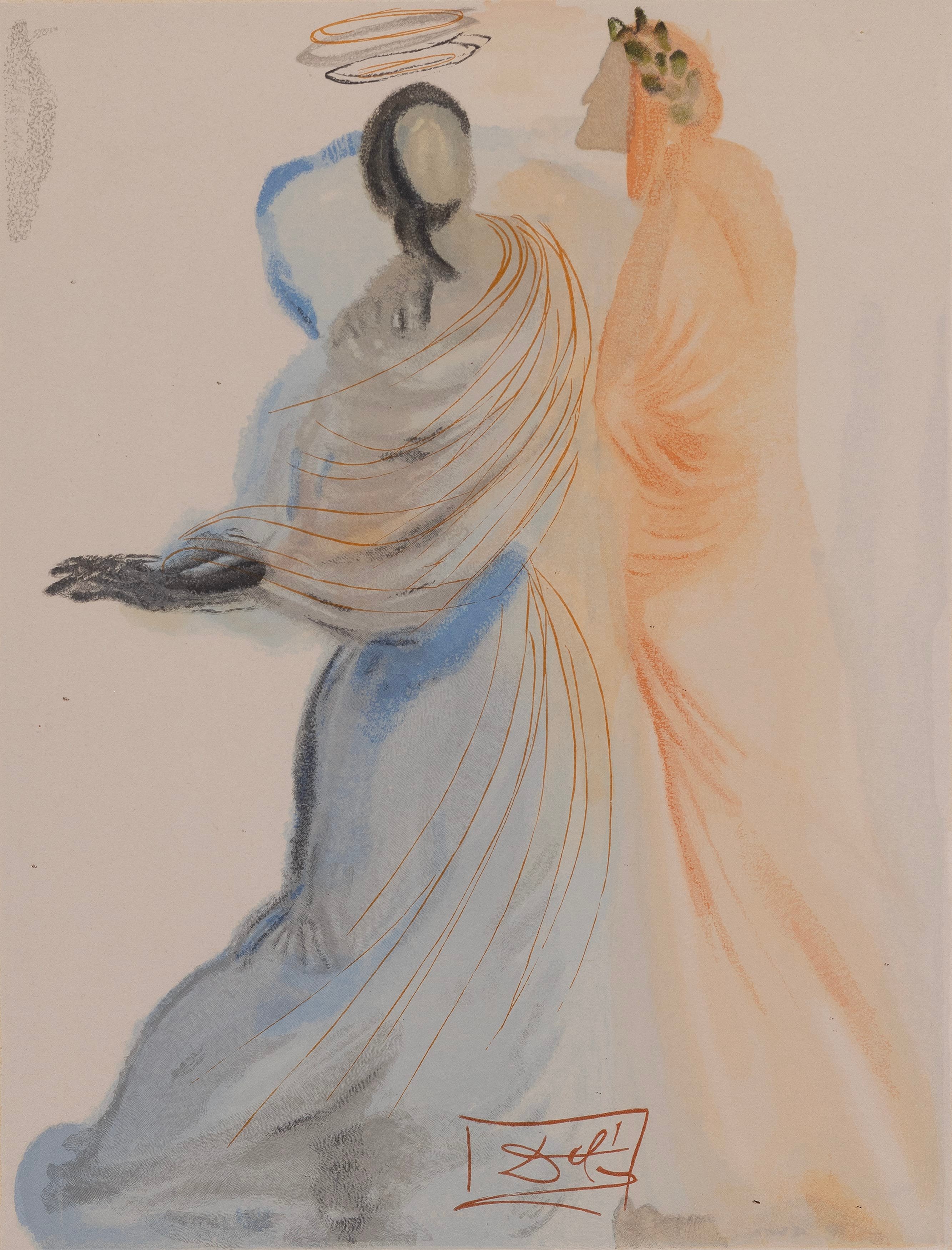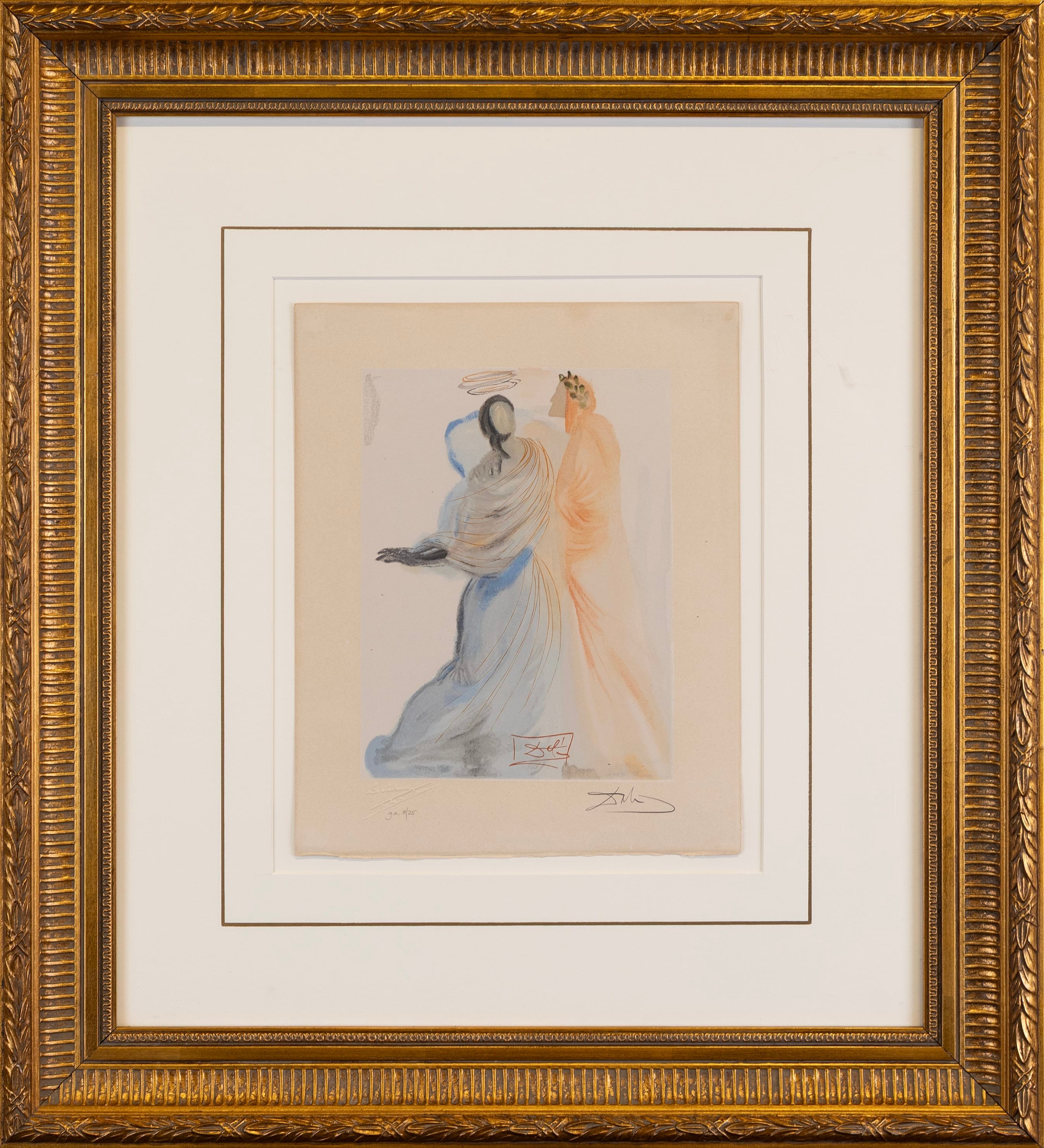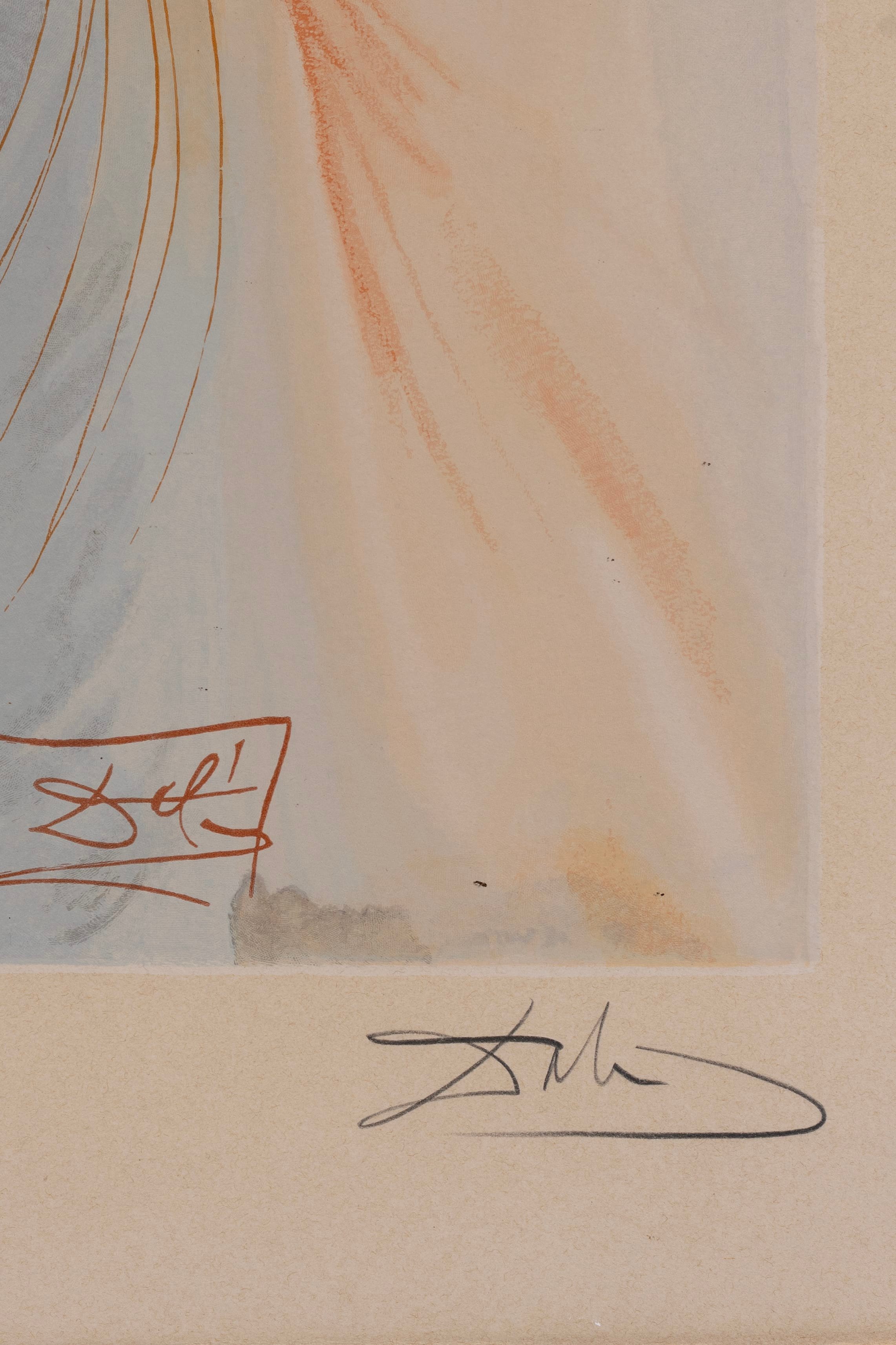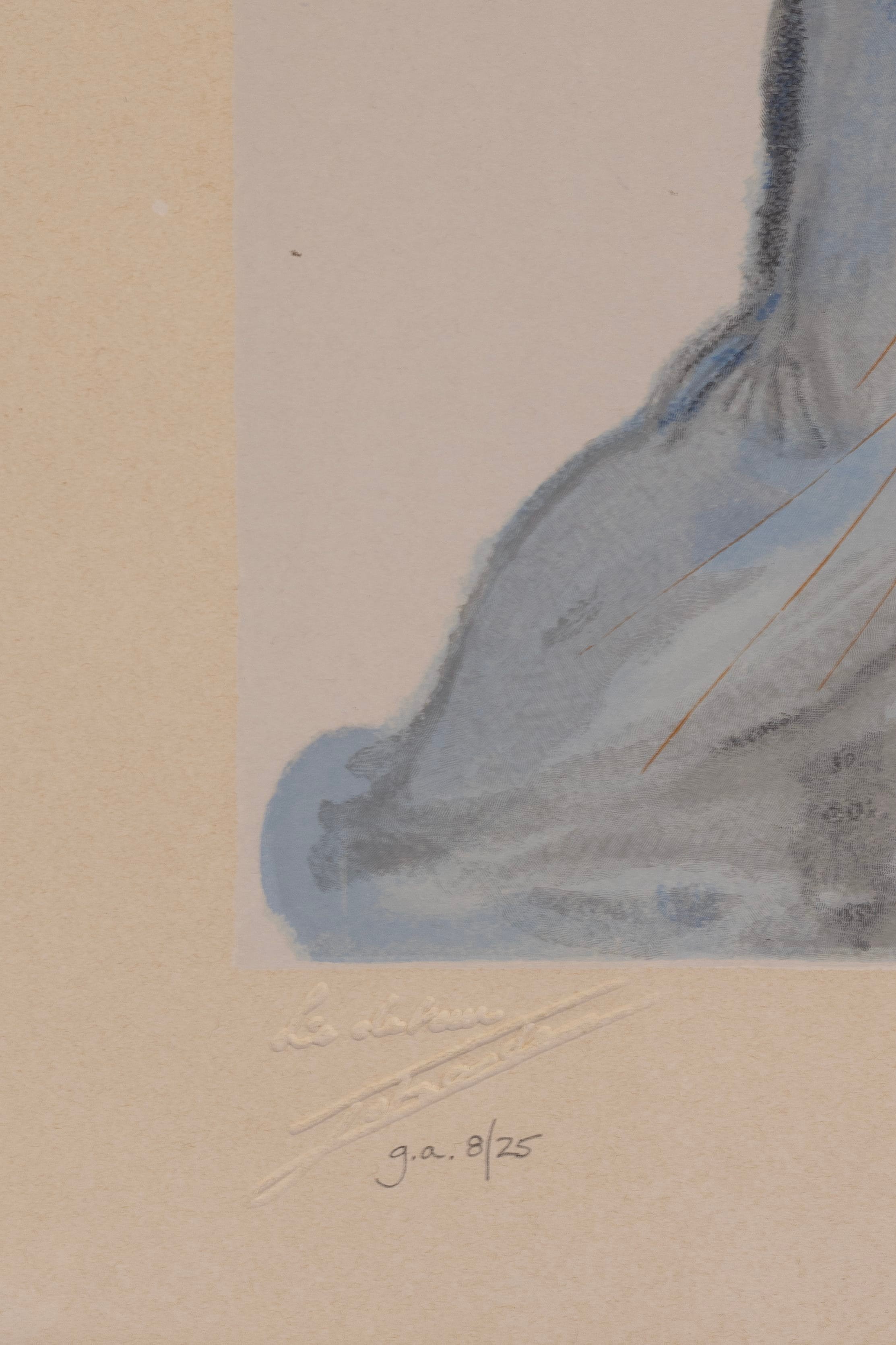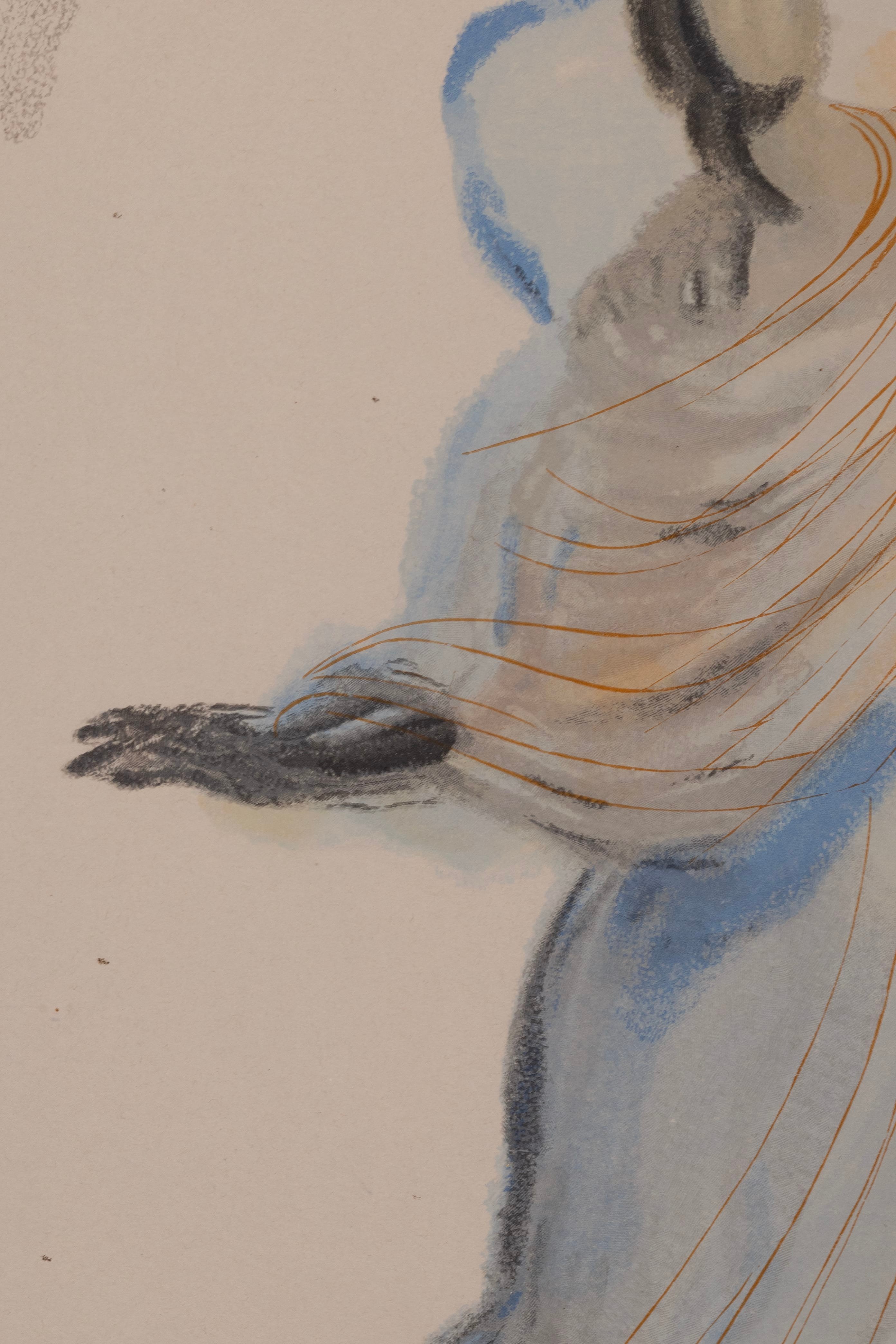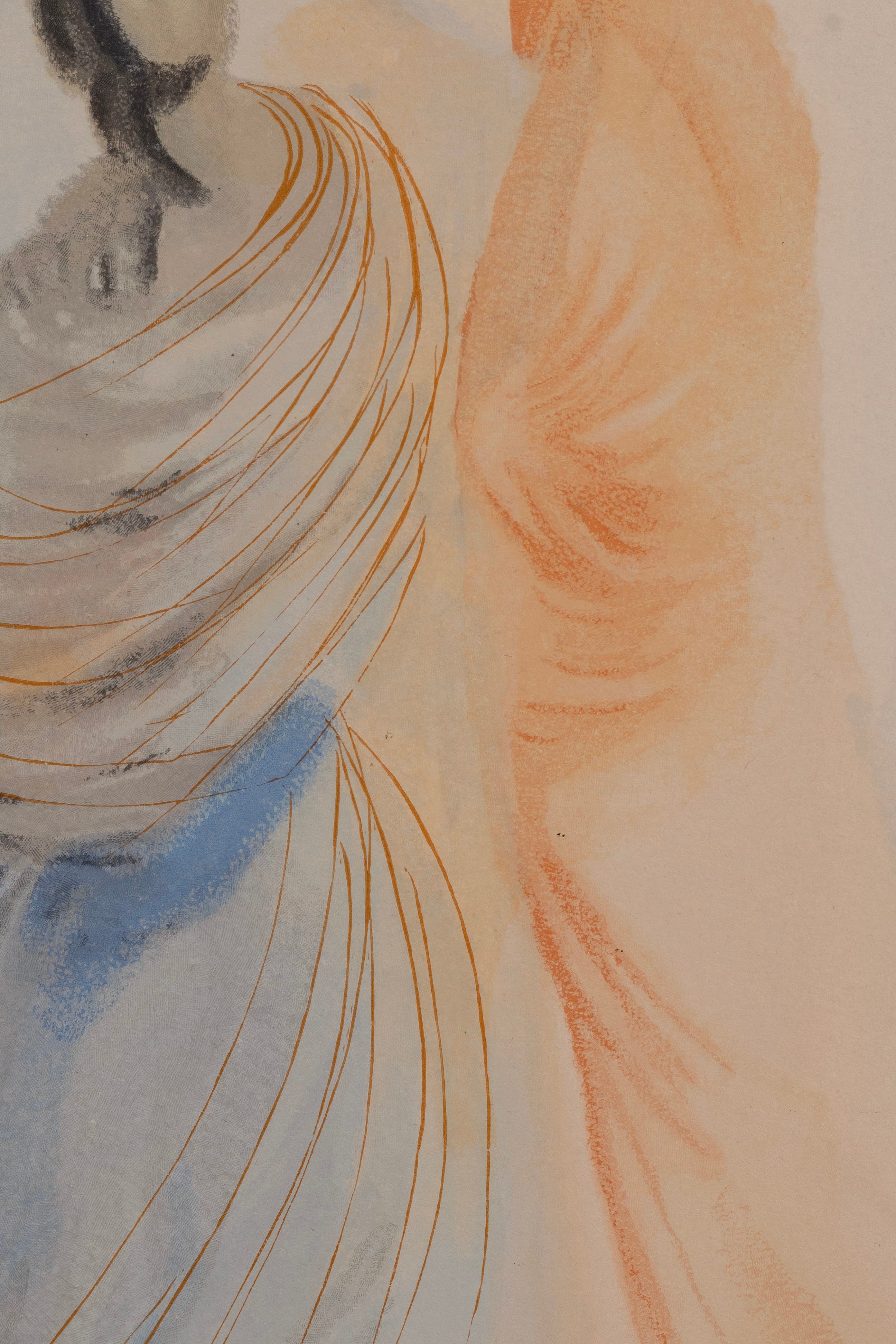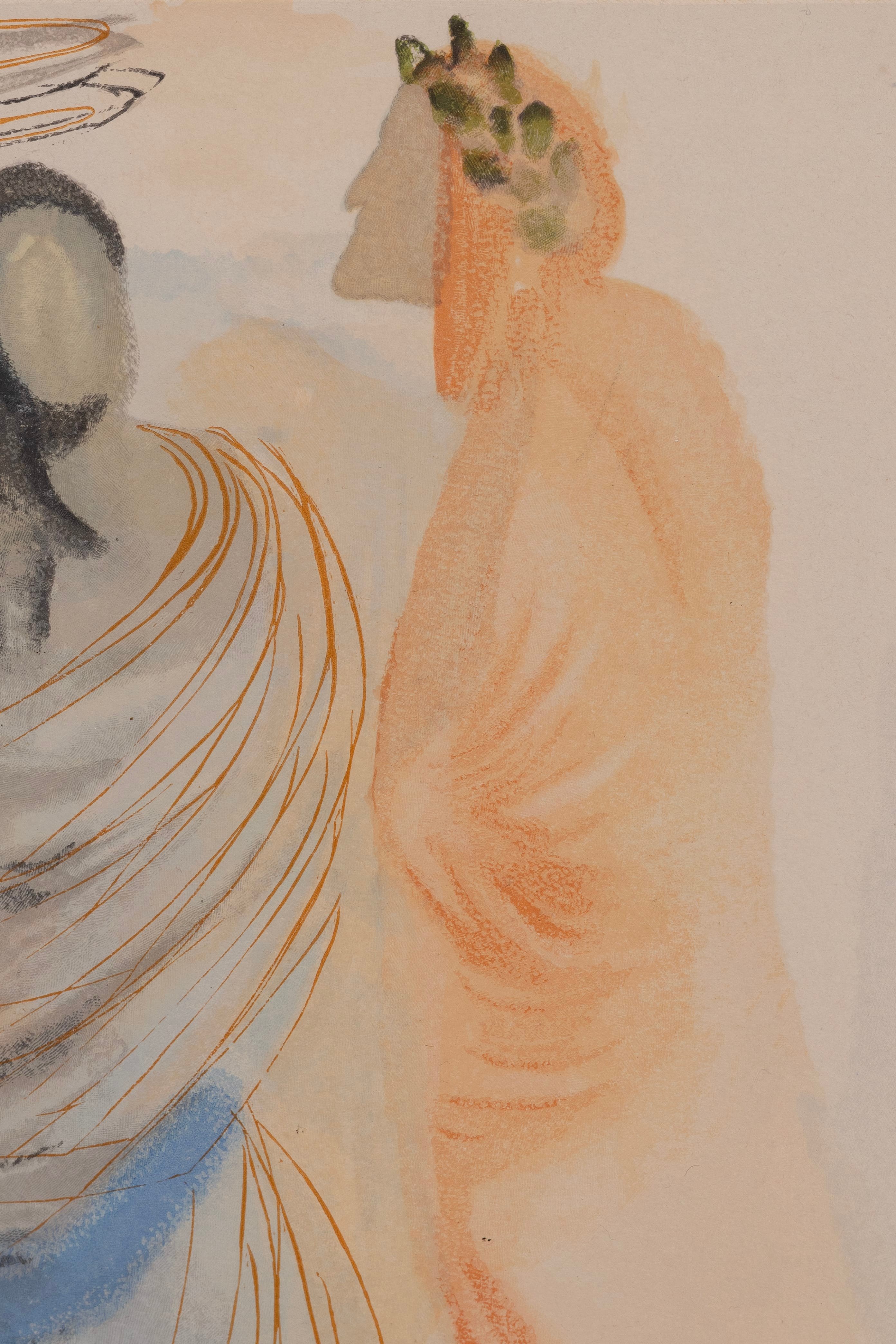
hand signed in pencil by the artist, and signed in the block
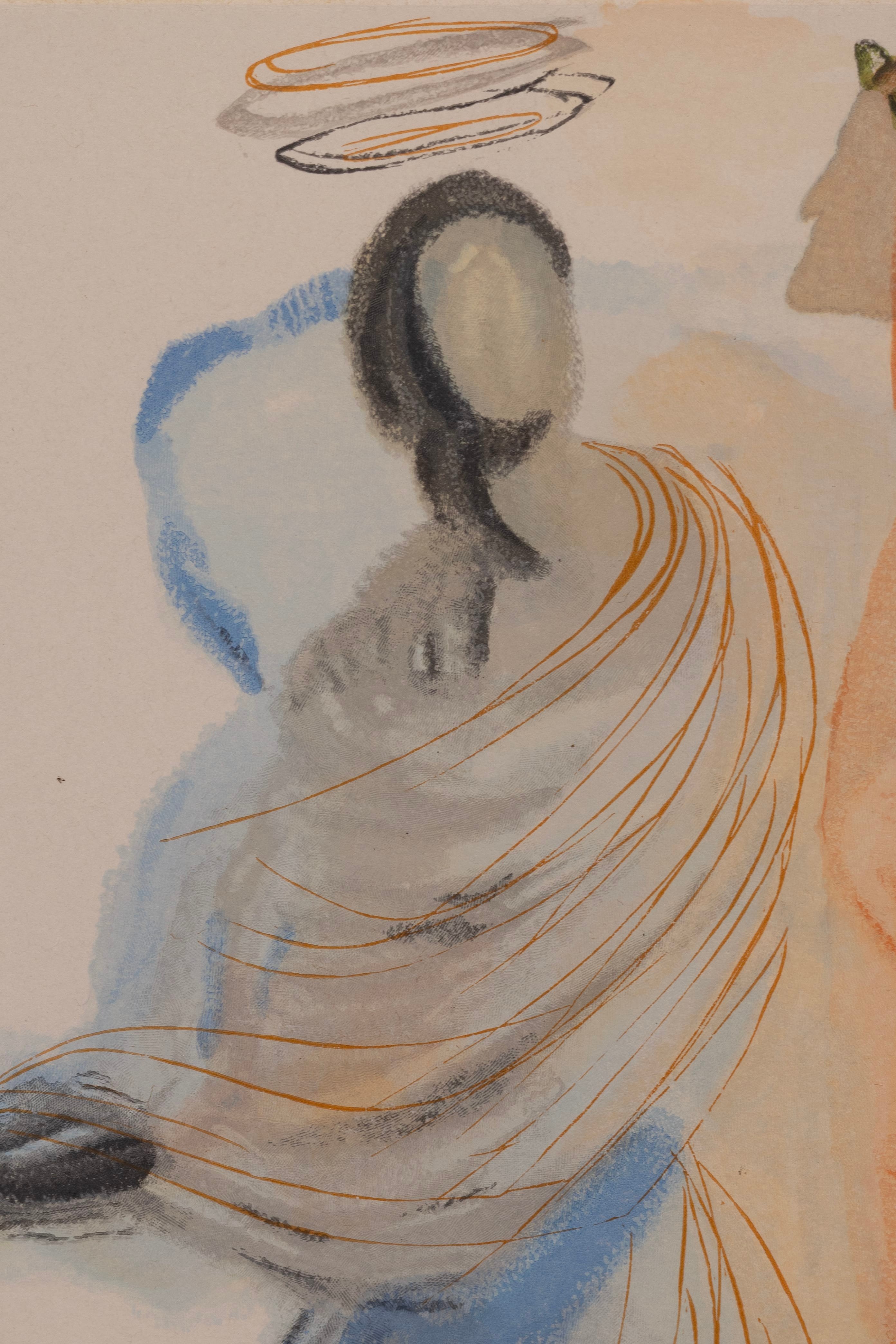
wood engraving in colour on BFK Rives vellum surface paper
33 x 26 cm
Published by Editions d’Art Les Heures Claires, Paris, France. Numbered 8/25, annotated g.a. with blindstamp of the editor and artistic director of Les Heures Claires, Mr. Jean Estrade, lower left margin.
Written circa 1308–21, Dante’s The Divine Comedy is considered as both Dante’s greatest work as well as a masterpiece of world literature. In 1950, the Italian government, specifically The National Library of Italy, commissioned Dalí to create 100 illustrations for a commemorative edition of Dante’s “The Divine Comedy” to mark the upcoming 700th anniversary of the poet’s birth.
Dali’s artistic focus during that period of the early 1950s was centred on the exploration of classicism and mysticism, which aligned perfectly with the task at hand. For the project, Dalí produced 100 watercolours between 1950 and 1952, one for each of the verses in “The Divine Comedy,” divided into 34 for Inferno, and 33 each for Purgatoria and Paradiso. Each section of the poem represents the soul’s journey towards the divine, beginning with the acceptance and rejection of sin (Hell), penitence (Purgatory), and finally, revelation and ascent towards God (Heaven). The ways in which Dante visualized and described Hell, Purgatory and Heaven have become canonical. His imagery has deeply shaped how these biblical concepts are represented in Western art and literature over the ensuing centuries. His unbridled creativity was at its apex in this project, channeling his proclivities for the bizarre, the sublime and the nightmarish.
More than any of the poem’s many illustrators, Dalí fits Dante’s vision. The inferno is to some extent already an absurd, surreal nightmare; in the act of translation from word to image, it is oftentimes difficult to pinpoint where the early Renaissance Poet ends and the Surrealist artist begins. That the two possess a shared sensibility in their conception of hell and purgatory as intellectual torture, body-horror and farce, we might expect. Dalí’s Paradise, however, offers up something we are much less likely to anticipate. The delicacy of line and colour on display here is unique in his oeuvre. All in all, it is something of a revelation.
By 1960, having completed the 100 watercolours, Dalí reached out to Paris-based fine art publishing house Editions d’art Les Heures Claires to make prints of this ambitious body of watercolours. Each of Dalí’s watercolours was carefully reproduced in woodblock by master engraver Raymond Jacquet and assistants in a process closely supervised by the Dalí himself.