
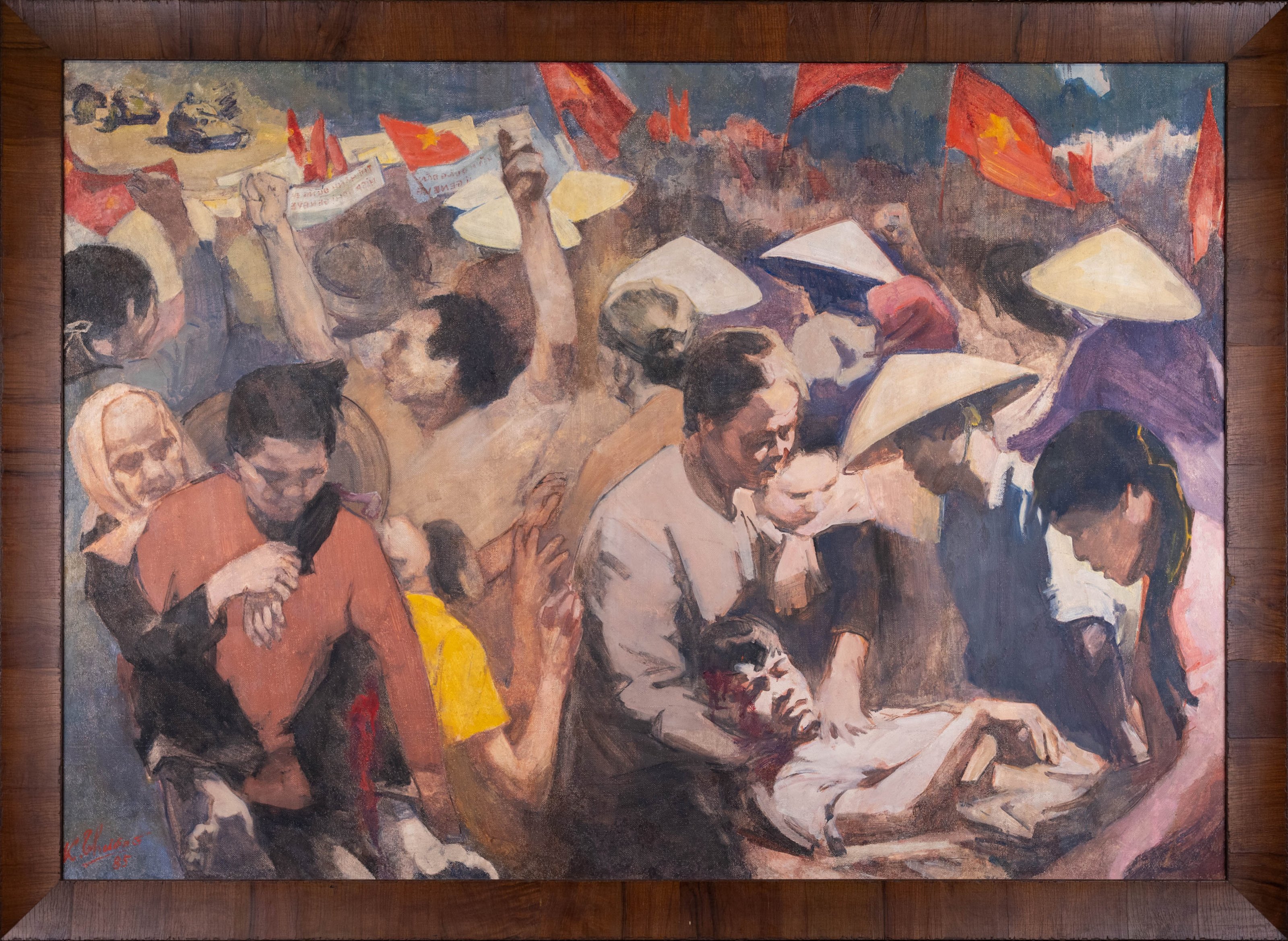
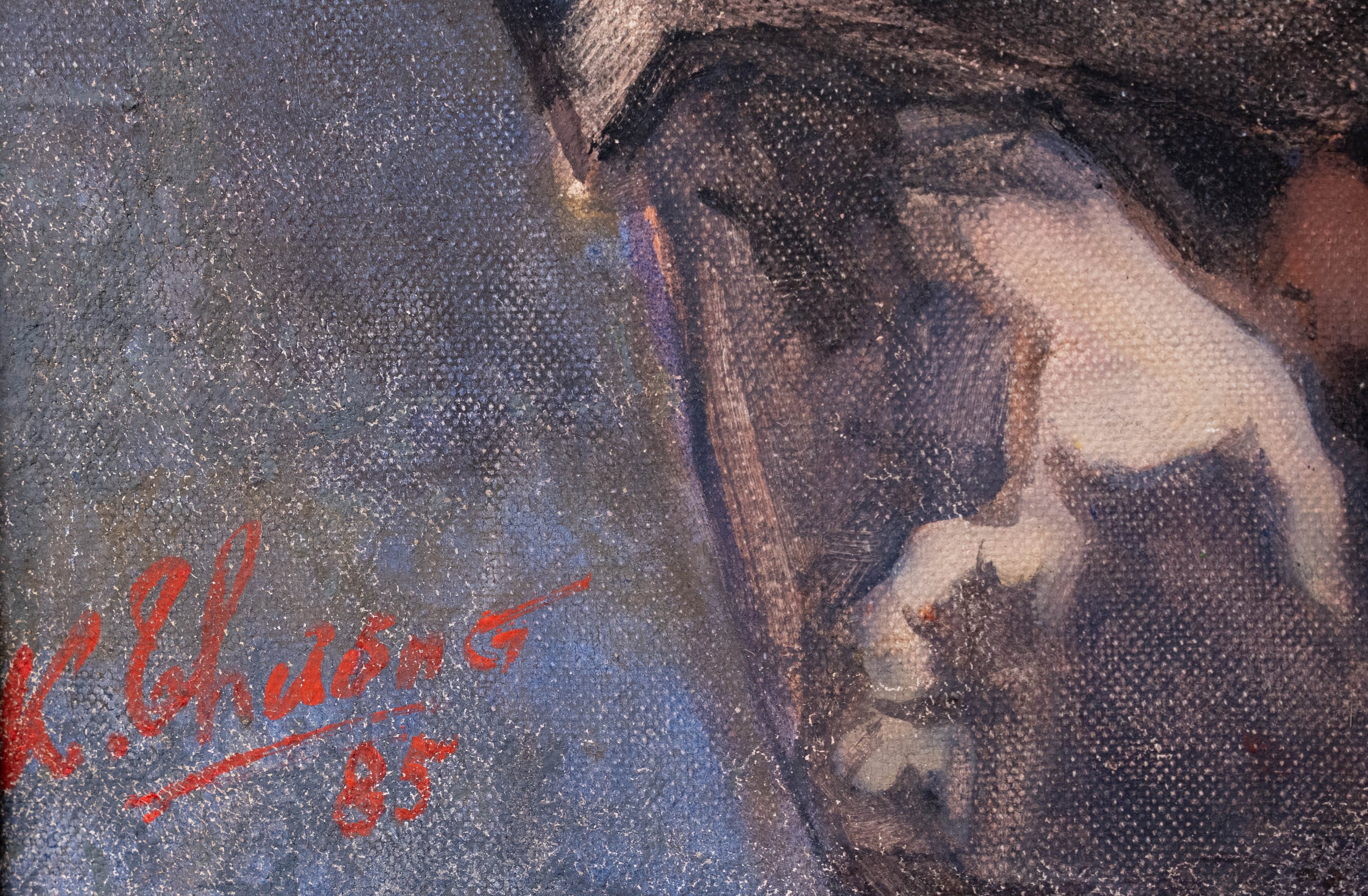
signed and dated bottom left
oil on canvas
95 x 135 cm, 109 x 149 cm (framed)
Condition
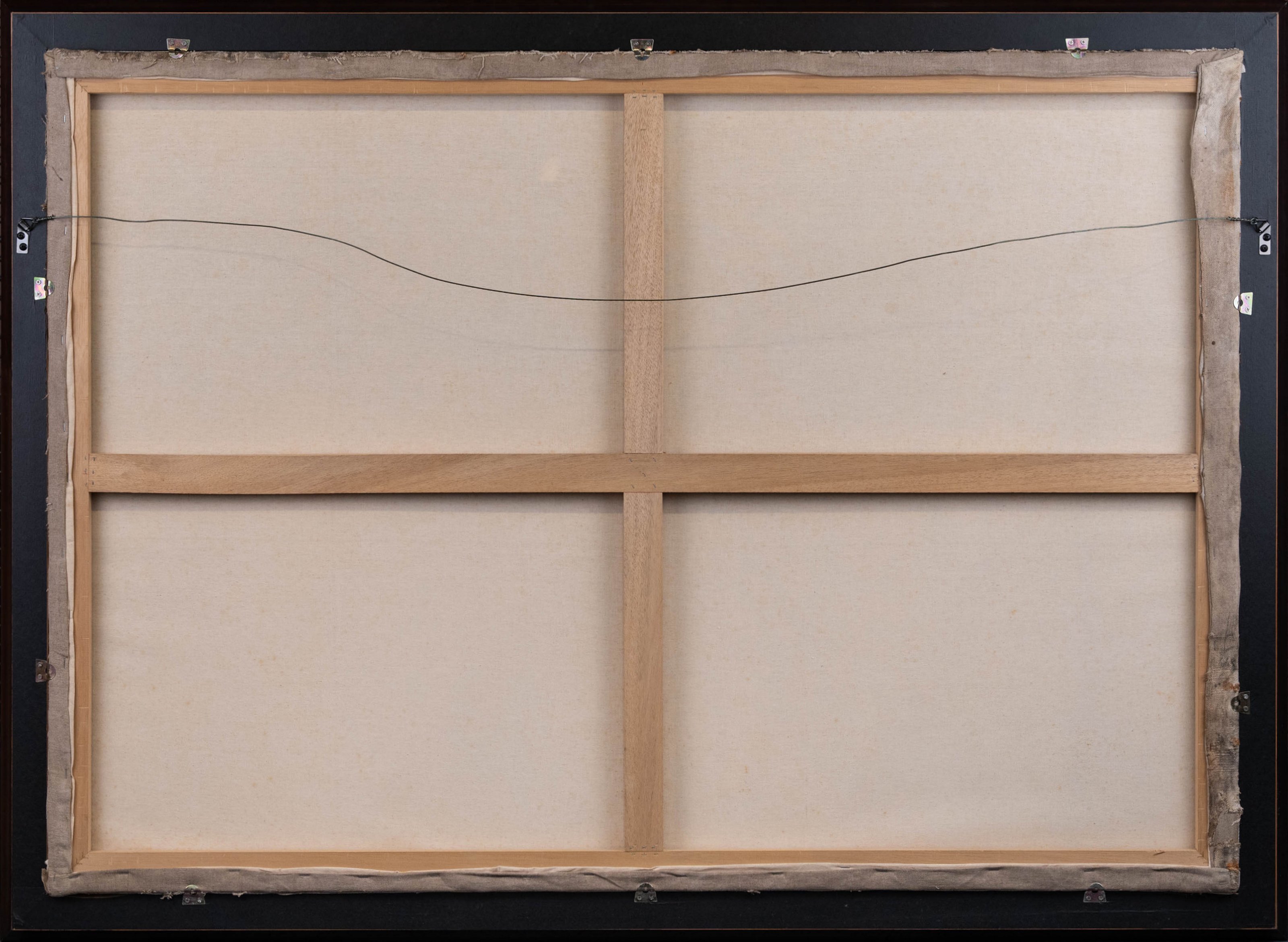
Painting has been conserved by art conservator Renate Kant in Singapore in 2007 and is in excellent restored condition. Examined under UV light: areas of retouching and inpainting evident, largely not apparent to the naked eye.
Lot location: Singapore
On display at ArteStudio (30 Toh Guan Road #06-01, Singapore 608840). Viewings by appointment only, email hello@annexe.asia to arrange a viewing.
LOT ESSAY
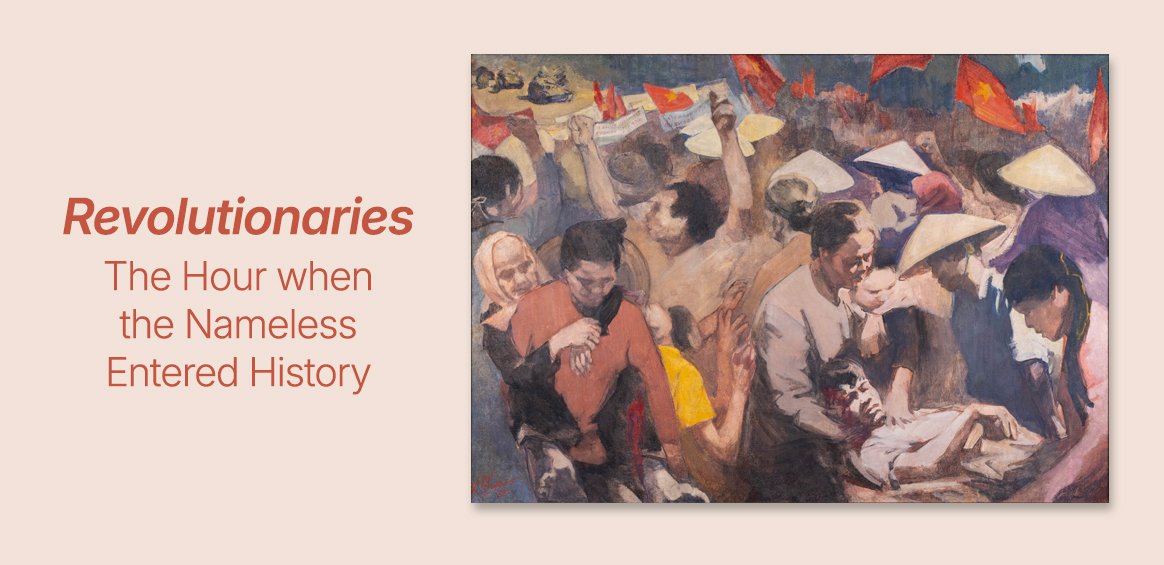
Revolutionaries, 1985, or The Hour When The Nameless Entered History
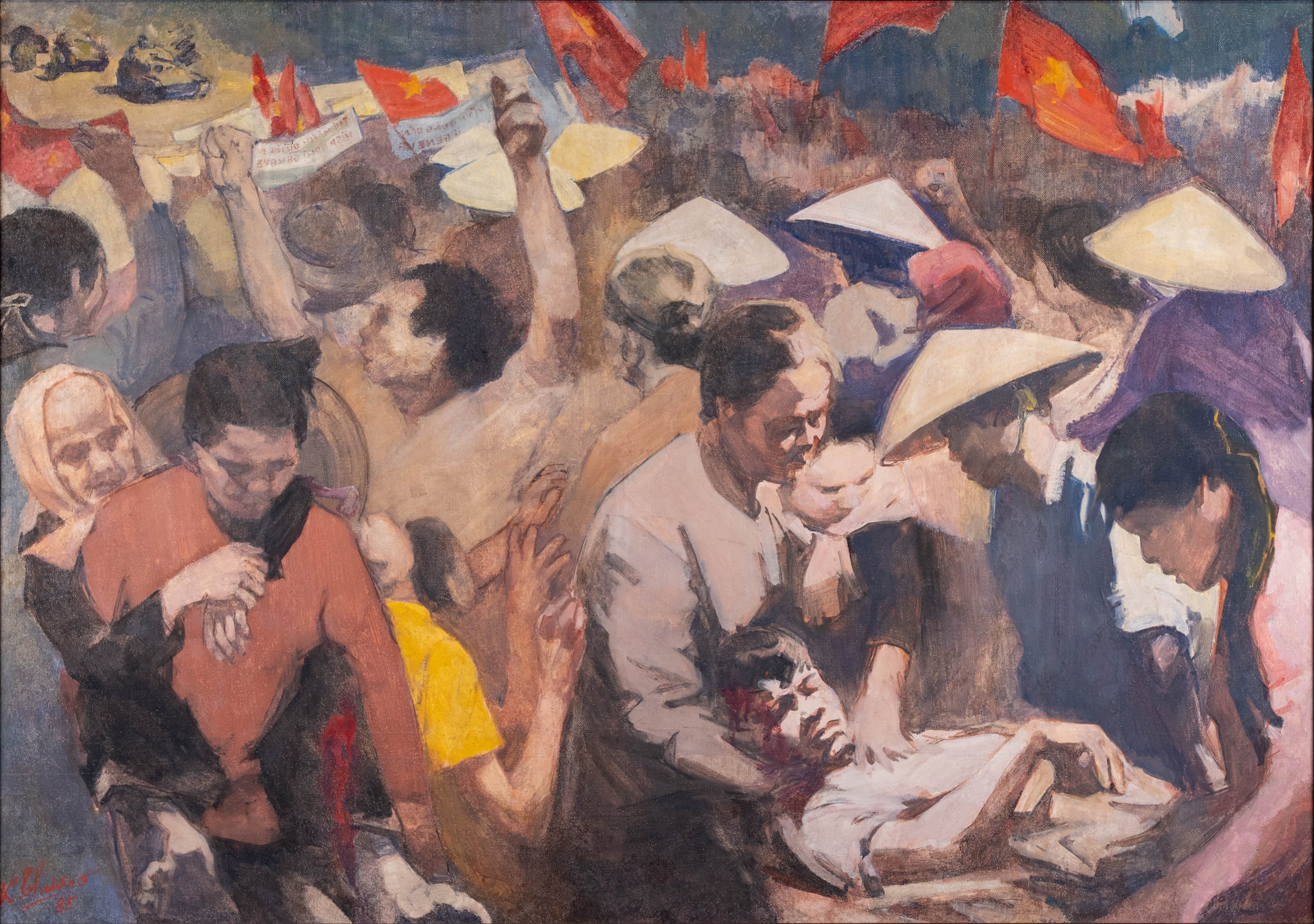
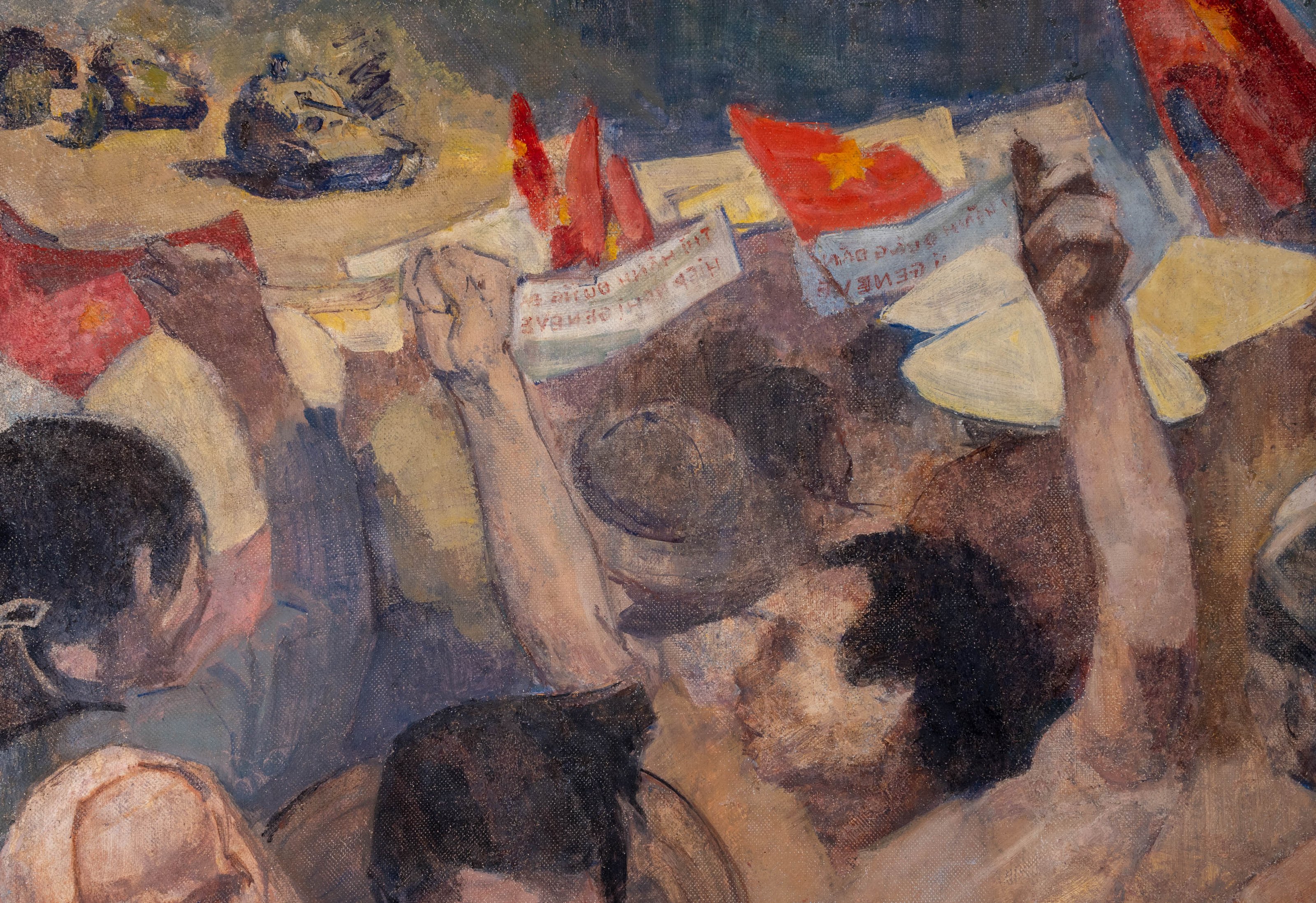
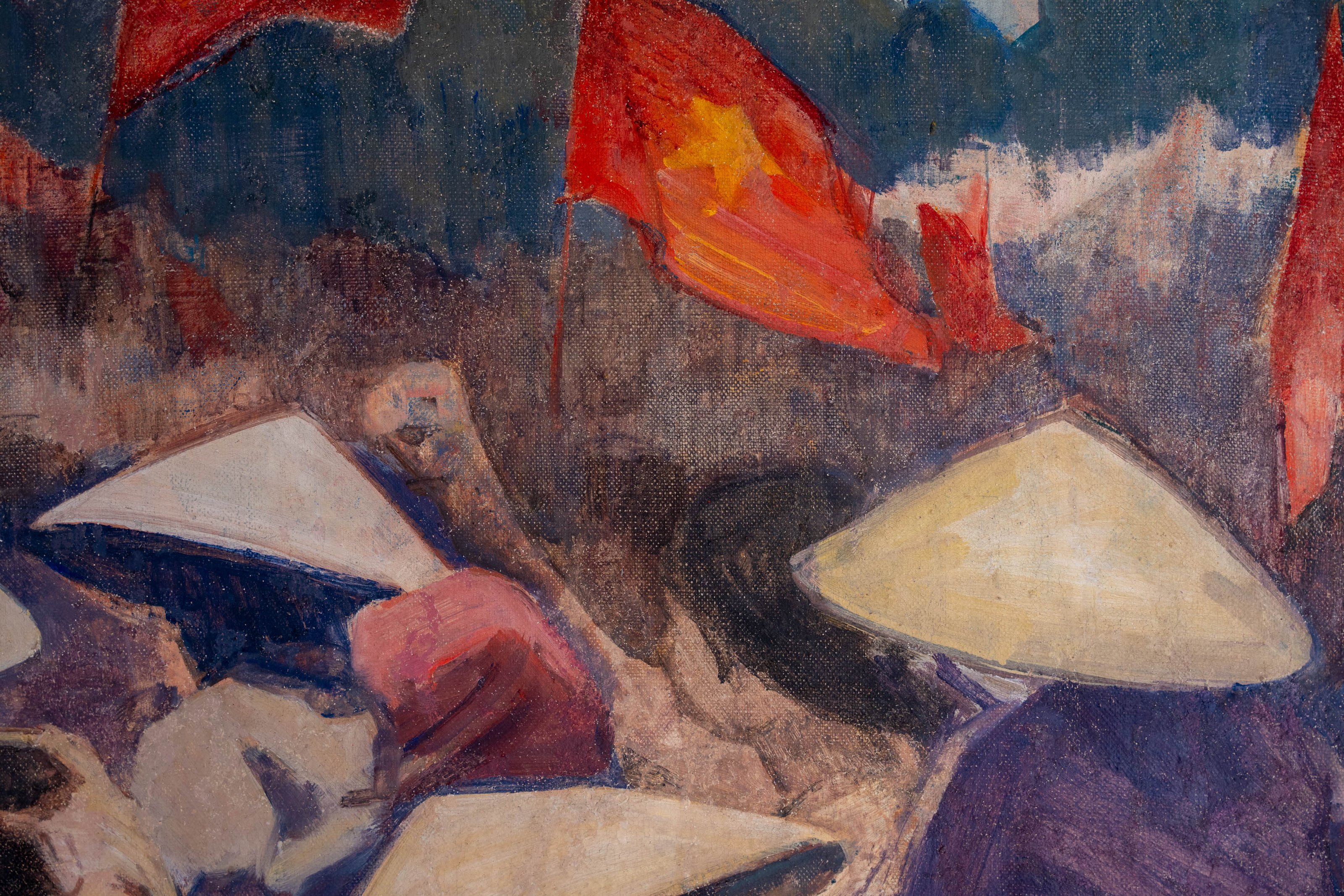
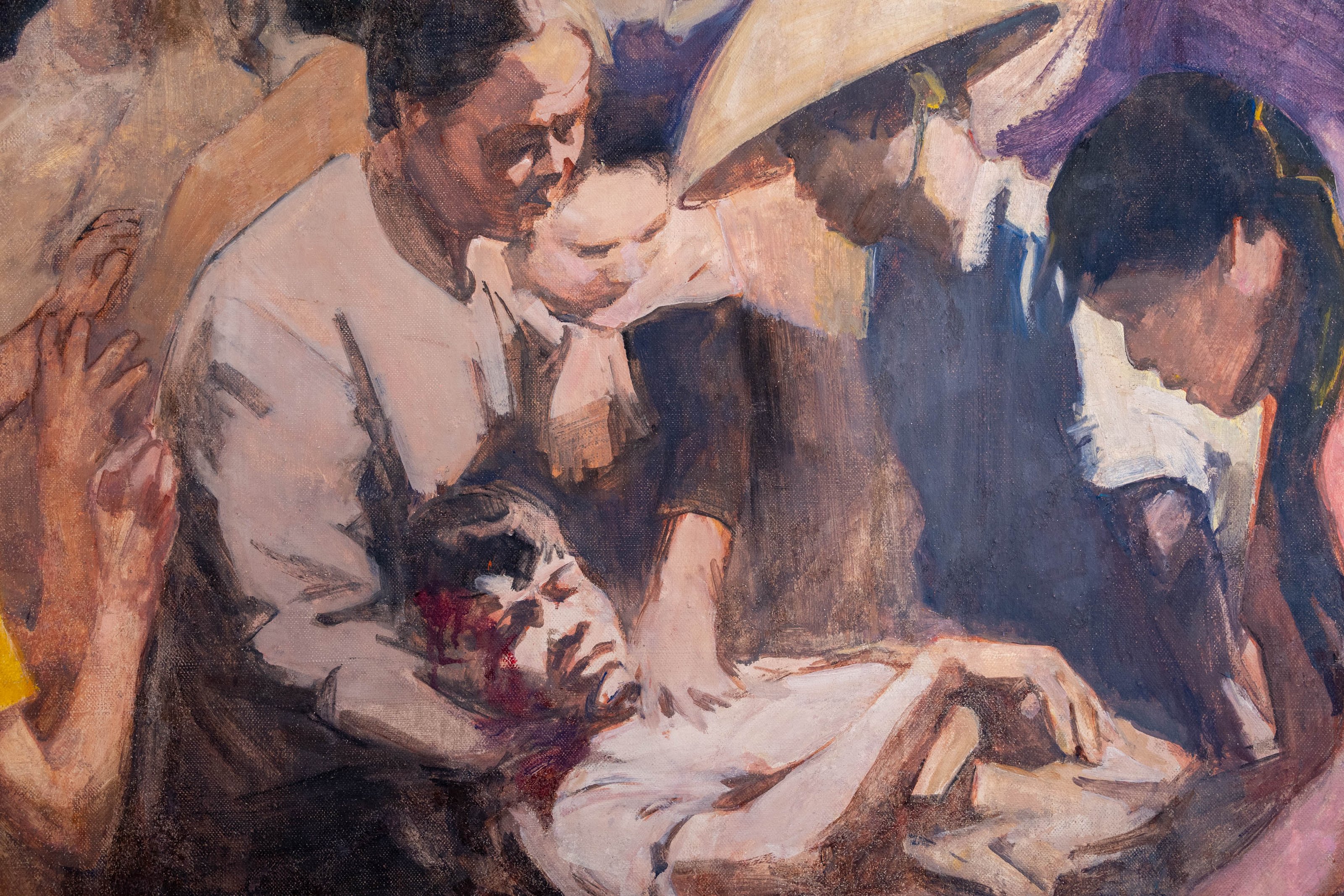
Executed in 1985, Revolutionaries belongs to the period of Nguyễn Cao (Kao) Thương’s 68, a moment when memory had risen to stand beside direct sight as one of painting’s essential powers. The work recalls the after-history of the Geneva Accords, that solemn covenant which once prescribed free general elections in both North and South within two years, only to be set aside thereafter by Ngô Đình Diệm. Yet Nguyễn Cao Thương does not render history as a cold political thesis. He restores it to the multitude, placing it among unarmed hands, the rims of Vietnamese conical hats, bodies marked by wounds, red flags, banners, and the slow, unceasing current of the people.
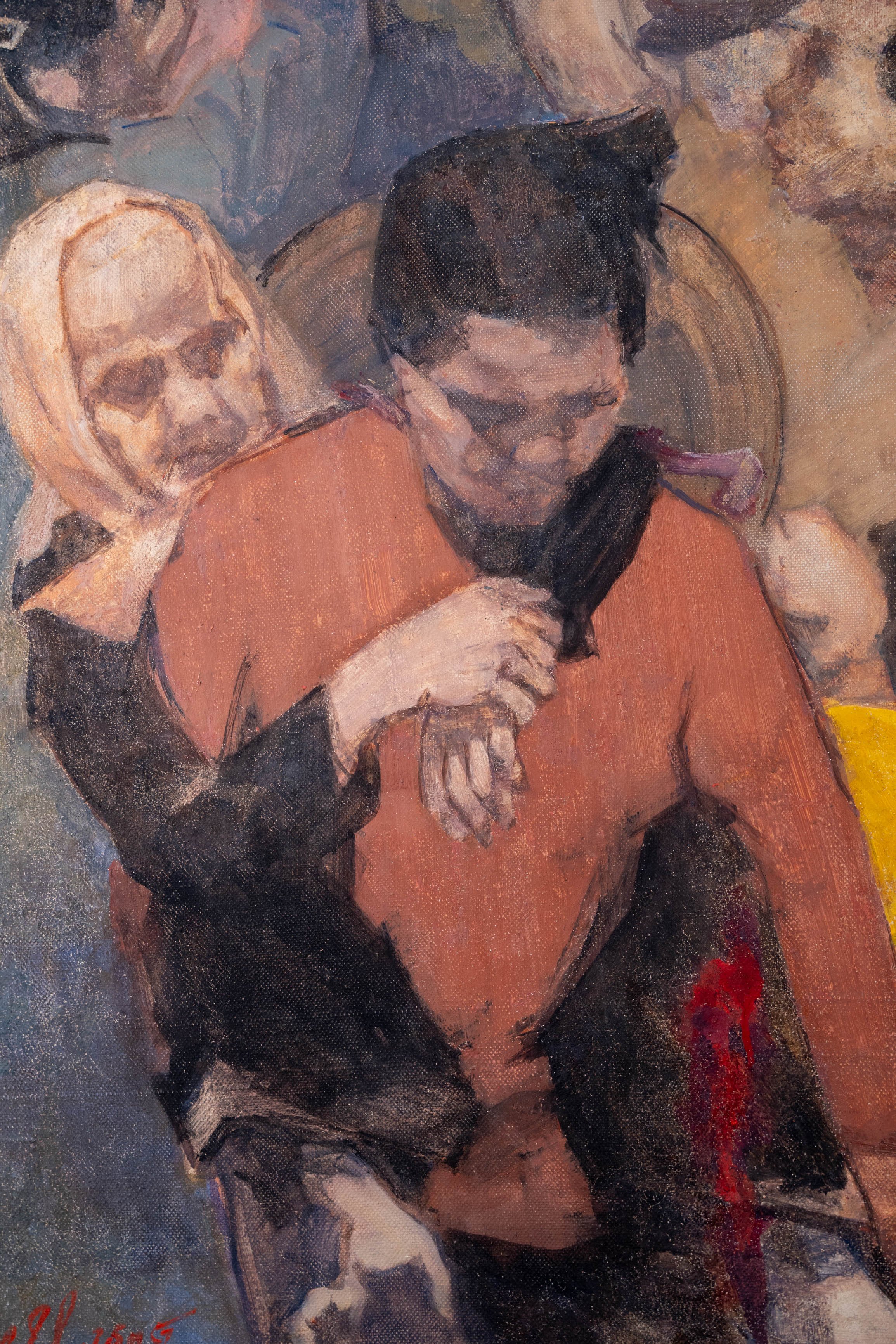
The composition is tightly compressed, as though scarcely a space for breath remained. Above, no broad vault of sky is opened; beyond, no tranquil distance is granted to the resting eye. The beholder is drawn into the midst of a mass in motion under the pressure of necessity. At the right centre, a wounded man in white, blood still visible, falls backward, sustained by those around him. Nearby, an elderly woman in a white headscarf, her leg still marked by a bleeding wound, is carried onward, her frail body yet bearing the signs of endurance. In such parts, political history is transfigured into human presence. The painting affirms that history is borne forward not by slogans alone, but by hardship, suffering, gestures of care, and sacrifice.
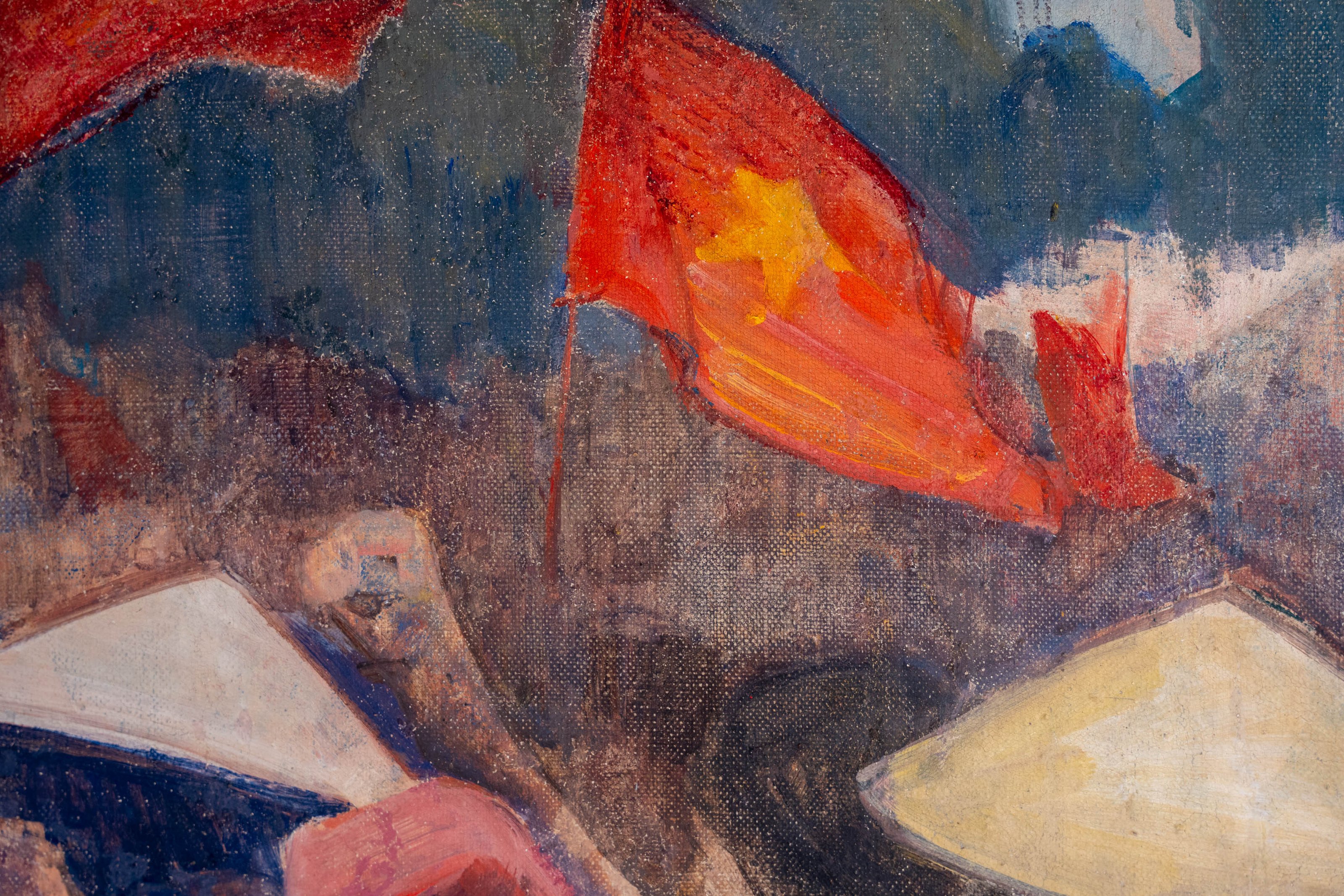
Above the crowd, red flags and banners invoke Geneva: “IMPLEMENT THE GENEVA AGREEMENT JUSTLY.” Such details anchor the work in a precise political memory: the demand that legitimate rights be honoured in practice. In the upper left, tanks or armoured vehicles emerge at a distance, cold, mechanical, and impersonal. They do not dominate the painting. Instead, they are visually subdued by the scale and moral gravity of the assembled multitude. Opposed to machinery stand hands, human bodies, banners, and the ethical authority of disciplined, peaceful resistance.
The palette is restrained yet retains an inner luminousity. Earth browns, ashen blues, violet greys, and chalk whites are awakened by red flags and brief flashes of yellow. Even within suffering and sorrow, Nguyễn Cao Thương allows light to endure. Therein resides the painter’s optimism: not the exultation of triumph, but the virtue of endurance.
Though formed within the discipline of Socialist Realism, Nguyễn Cao Thương nonetheless refused the rigidity of propaganda. His brushwork remains searching, generous, at moments almost sketch-like. Forms emerge, dissolve, and return again, as memory itself continues to move. Revolutionaries is therefore not merely a faithful political image, but a grave and powerful meditation on history, sacrifice, and belief. Its deepest subject is not victory, but the dignity of ordinary men and women carrying history forward.
Những Người Cách Mạng, 1985, hay Cuộc Hành Trình Của Những Kẻ Vô Danh Qua Lịch Sử
Thực hiện năm 1985, Những Người Cách Mạng thuộc giai đoạn tuổi 68 của Nguyễn Cao (Kao) Thương, khi ký ức đã đứng ngang hàng với trực quan như một năng lực thiết yếu của hội họa. Tác phẩm gợi lại hậu cảnh của Hiệp định Genève, văn kiện từng long trọng định liệu cuộc tổng tuyển cử tự do ở cả hai miền Nam Bắc trong vòng hai năm, rồi về sau bị Ngô Đình Diệm khước từ. Song Nguyễn Cao Thương không trình lịch sử như một mệnh đề chính trị lạnh lùng. Ông đặt lịch sử vào giữa đám đông, nơi có những bàn tay không khí giới, những vành nón lá, những thân thể mang thương tích, những lá cờ đỏ và biểu ngữ cùng dòng chảy chậm rãi của nhân quần.
Bố cục nén chặt, tưởng chừng không còn khoảng thở. Trên cao không có vòm trời mở rộng, nơi xa không có cảnh yên tĩnh cho mắt nghỉ ngơi. Người xem bị kéo vào giữa một khối người đang chuyển động bởi sức ép tất yếu. Ở trung tâm bên phải, một người đàn ông áo trắng bị thương rỉ máu ngả người ra sau, được những người quanh mình nâng đỡ. Gần đó, một bà lão khăn trắng với vết thương còn rỉ máu ở chân được cõng đi, thân thể yếu mòn mà vẫn còn dấu chịu đựng. Ở những đoạn ấy, chính trị đã hóa thành thân xác. Bức tranh xác quyết rằng lịch sử không chỉ được mang đi bằng khẩu hiệu, mà bằng nhọc nhằn, đau đớn, lòng chăm nom và sự hy sinh.
Phía trên đám đông, cờ đỏ và biểu ngữ nhắc đến Genève: “THI HÀNH ĐÚNG ĐẮN HIỆP NGHỊ GENÈVE.” Những chi tiết này đặt tác phẩm vào một ký ức chính trị cụ thể: đòi hỏi các quyền chính đáng phải được thực thi. Ở góc trên trái, xe tăng hoặc thiết giáp hiện ra từ xa, lạnh lẽo và máy móc. Chúng không chiếm lĩnh bức tranh. Trái lại, chúng bị khuất phục về mặt thị giác bởi sự lớn lao của khối quần chúng. Đối diện với guồng máy cơ giới là bàn tay, thân người, biểu ngữ và thẩm quyền đạo lý của tinh thần kháng cự ôn hòa, có kỷ cương.
Bảng màu tiết chế nhưng vẫn có ánh sáng nội tại. Nâu đất, lam tro, tím xám và trắng phấn được đánh thức bởi cờ đỏ và những điểm vàng chớp sáng. Ngay trong đau thương, Nguyễn Cao Thương vẫn để ánh sáng tồn tại. Chính ở đó hiện ra niềm lạc quan của người họa sĩ: không phải chiến thắng hân hoan, mà là sức bền.
Dẫu được hình thành trong kỷ luật của hiện thực xã hội chủ nghĩa, Nguyễn Cao Thương vẫn từ chối sự cứng nhắc của tuyên truyền. Nét cọ dò tìm, khoan hậu, đôi chỗ gần như ký họa. Hình hiện rồi tan, tan rồi lại hiện, như chính ký ức vẫn đang vận hành. Những Người Cách Mạng vì thế không chỉ là một hình ảnh chính trị trung thành, mà còn là một suy tưởng thẩm mỹ mạnh mẽ và trang trọng về lịch sử, hy sinh và niềm tin. Chủ đề sâu nhất của tác phẩm không phải chiến thắng, mà là phẩm giá của những con người bình thường đang mang lịch sử tiến về phía trước.
ANNEXE thanks art researcher Dinh Thuc Doan Tran for this essay contribution.